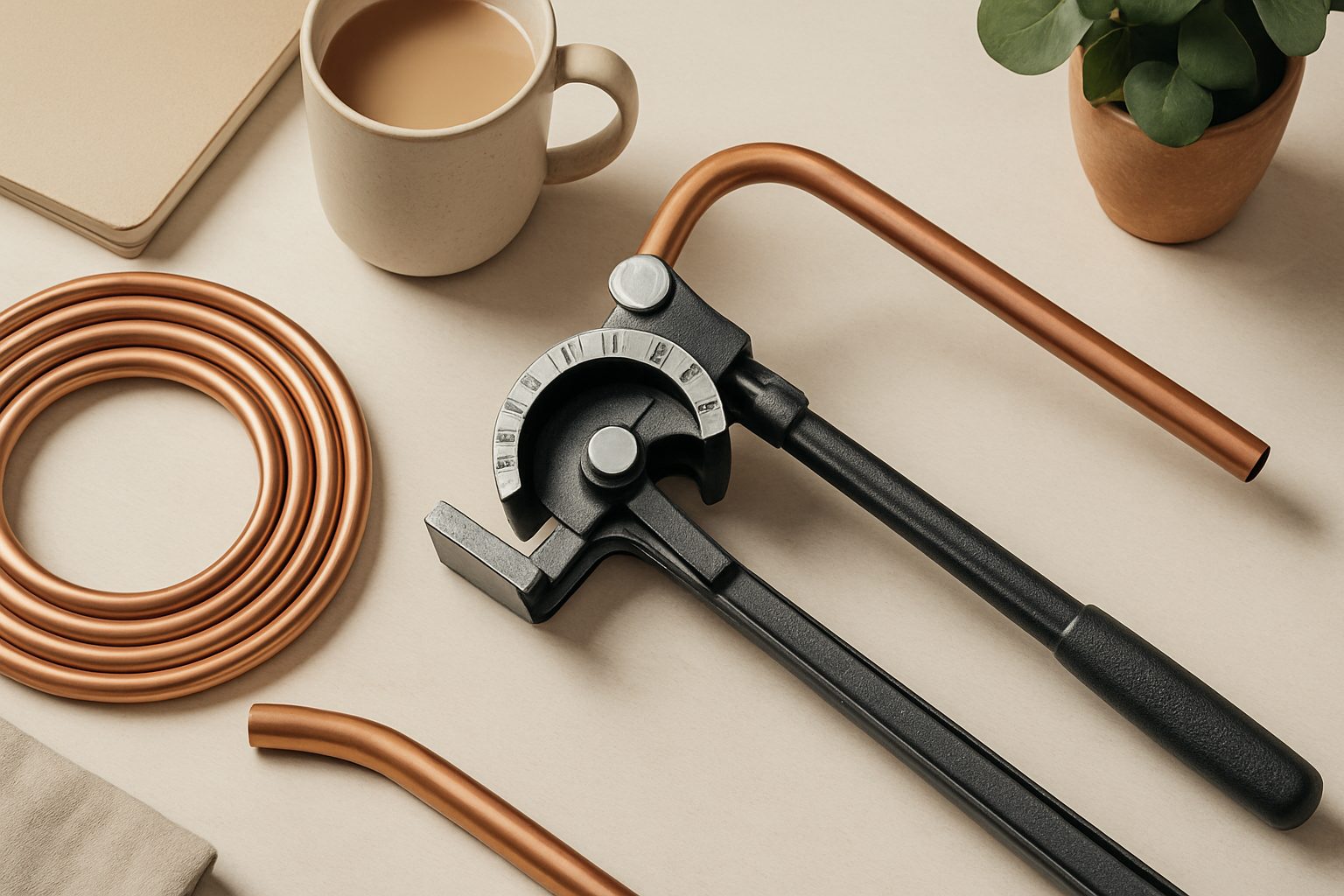
Bench-Mounted Pipe Bending Machines UK – Are They Worth It for Home Use?
If you're planning to bend pipes regularly—whether for plumbing projects, automotive work, or fabrication—a bench-mounted bender can save hours of frustration compared to manual bending or improvised methods. But at £200–£500, they're not trivial investments. The question isn't really whether they work; it's whether one suits your actual workshop needs and budget.
What You Get with a Bench Bender
A bench-mounted machine clamps pipes (typically steel and mild steel, sometimes copper and aluminium) and bends them to specific angles using either a mechanical lever or a ratchet mechanism. The pipe sits in a U-shaped die, the bending shoe applies force, and you rotate or push the lever to create the bend. Once locked to your workbench, the machine stays stable during use—no wrestling with the workpiece like you would with manual methods.
This matters more than it sounds. Clean bends without kinks, repeatable results, and the ability to work safely without straining your back are genuine benefits for workshop projects that involve multiple bends or consistent angles.
The Clarke PB16F
The Clarke PB16F is probably the most common entry-level choice on UK high streets and online. It handles pipes up to 16mm diameter in mild steel, with dies for 6mm, 8mm, 10mm, 12mm, and 16mm sizes.
Strengths: It's straightforward to use, dies are readily available, and the price (typically £200–£280) is accessible for occasional users. The manual ratchet mechanism is reliable—there's not much to go wrong. It also bends copper and aluminium fairly well, which some users appreciate for plumbing applications.
Weaknesses: The mechanical advantage requires real physical effort, especially with 16mm steel. If you're bending thick-walled pipe or need production-level speed, this becomes tiring quickly. The machine also sits a bit low on a standard bench, which means awkward positioning for taller users. Some users report that getting perfectly clean bends on the smallest (6mm) pipes is fiddly.
Best for: Occasional DIY plumbing, light fabrication projects, automotive enthusiasts, and anyone who needs a few bends per project rather than dozens.
SIP Industrial Machines
SIP offer several bench benders, with their manual models ranging from £250–£400 depending on capacity. Their machines tend to handle slightly larger diameters (up to 20mm) and include more die options than the Clarke.
Strengths: Build quality is genuinely solid—the castings are substantial, and the toggle-lock mechanism feels more refined than cheaper alternatives. The higher capacity means you're not hitting the limits if projects grow. SIP machines often come with more dies included, which saves money if you're regularly working with different pipe sizes. Some models include bends for flat stock, which adds versatility.
Weaknesses: The higher price (£300–£400+) is hard to justify if you're only bending a handful of pipes per year. The extra weight and bulk also demand more bench space. Setup time—changing dies, positioning the workpiece—is slightly longer than with simpler machines, though this is genuinely minimal.
Best for: Serious hobbyists, small workshops, or professionals who bend pipes as part of recurring side work but don't need an industrial hydraulic machine.
Record Power Bench Benders
Record Power's offerings are comparable to SIP in quality but often sit in the £300–£450 price bracket. Their machines have a reputation for precision, particularly when repeatability matters.
Strengths: The design is refined; handles diameters up to 20mm and sometimes offers both mild steel and stainless-capable dies. The toggle mechanism is smooth, and alignment between the pipe and dies is very consistent. If you're producing batches of identically bent pipes, Record Power machines reward the care you put into setup.
Weaknesses: Cost and bench space are the main drawbacks. You're paying for precision; if your project tolerance is "roughly 90 degrees," you're overspecifying. The learning curve is slightly steeper—getting the best results requires understanding die seating and pipe positioning more deeply than with simpler machines.
Best for: Fabricators, plumbing professionals, or workshop owners who value consistency and don't want to compromise on quality over the machine's lifetime.
Is a Bench Bender Worth It?
That depends entirely on your bending frequency and accuracy requirements.
Get one if: You're bending pipes or tubes regularly—more than a handful per project, or multiple projects per year. You're making plumbing runs where consistent angles matter. You're fabricating components repeatedly and value not having to redo bends. You have the bench space and your main projects aren't one-off jobs.
Skip it if: You're bending pipes once every couple of years. Your projects can tolerate crude bends. Budget is tight and space is at a premium. You're working with pipes outside the 6–20mm range routinely (you'd need industrial equipment anyway).
Storage and Maintenance
Bench benders are permanent installations—expect to anchor them properly and lose that bench space. They're not heavy enough to walk away with, but they're not portable either. Maintenance is minimal: occasional oil on the pivot points, checking that dies aren't corroded, and keeping the ratchet mechanism clean. Rust is the main enemy, especially if your workshop gets damp. A coat of thin machine oil every few months prevents problems.
Final Verdict
A Clarke PB16F makes sense if you're testing the waters or doing light work—it costs little and works reliably. For regular workshop use with higher quality expectations, SIP or Record Power machines justify their extra cost through durability and precision. The right choice depends on whether pipe bending is a one-off curiosity or a genuine recurring task in your workshop.
More options
- Clarke Pipe Benders (Clarke PB16F & Clarke Strongarm range) (Amazon UK)
- Silverline Pipe Benders & Spring Bender Sets (Amazon UK)
- Monument Pipe Bender & Lever Bender Range (Amazon UK)
- Hydraulic Pipe Bender Kits (12T / 16T multi-former sets) (Amazon UK)
- Rothenberger Rocbend & Copper Pipe Bender Sets (Amazon UK)