Best Conduit Pipe Benders for Electricians UK (Steel & PVC Conduit)
Getting clean, consistent bends in electrical conduit is essential for professional first-fix work. A decent conduit bender transforms the job from awkward guesswork to repeatable precision — especially when you're running 20mm and 25mm steel or PVC conduit through timber frames and under floors. The difference between a hand-cranked tool and fumbling with a heat gun and bending by eye is night and day.
What You Need from a Conduit Bender
Conduit bending sounds straightforward until you realize how easy it is to kink or flatten a run. A proper bender holds the pipe steady and applies even pressure across the bend radius, preventing the walls from collapsing and the bend from becoming an obstruction to cable pull-through. For domestic electrical work, you're typically working in tight spaces — under joists, through partition walls — where neat, repeatable bends matter more than speed.
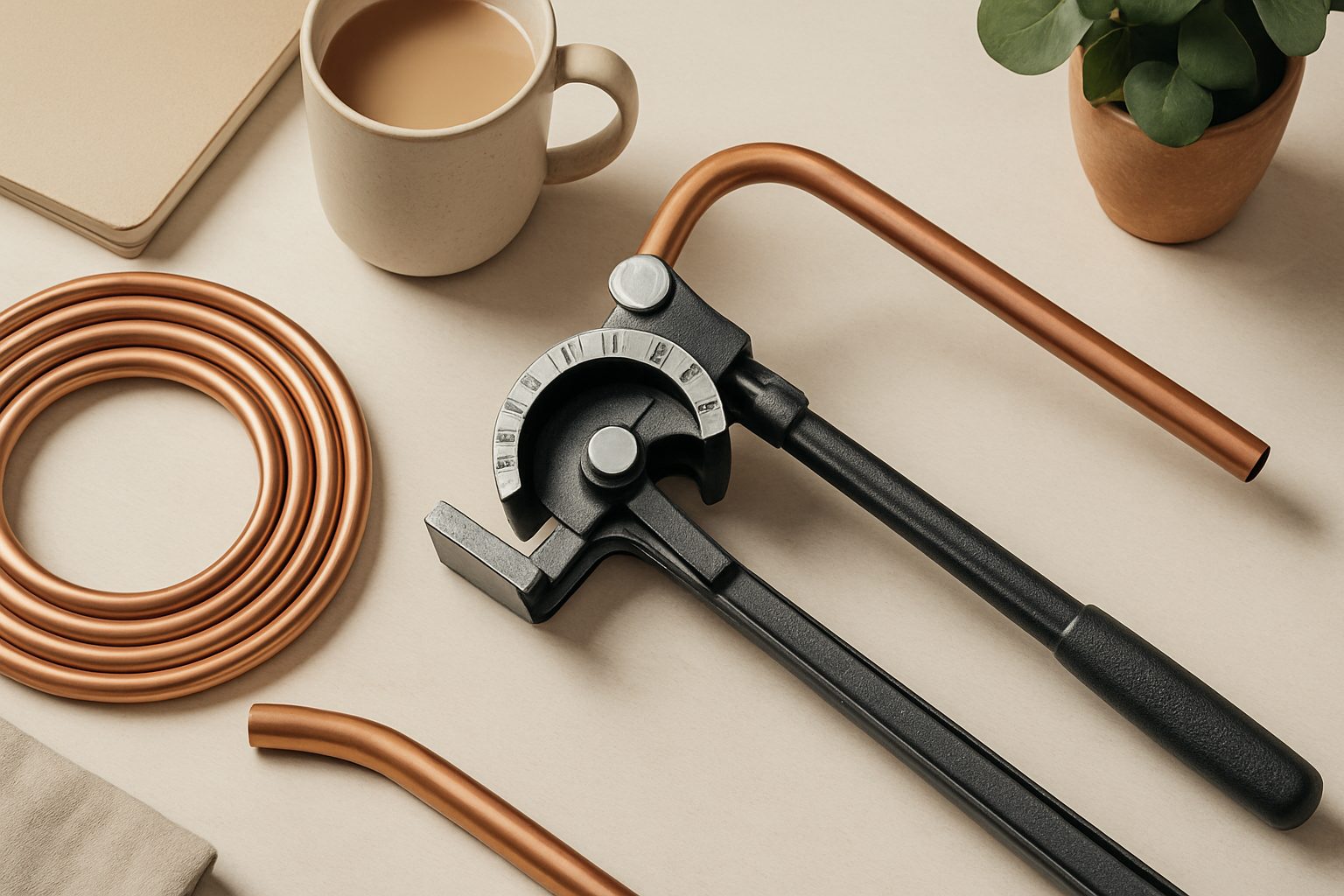
Most domestic first-fixers use hand-cranked or lever-operated benders. These are mechanically simple: a fixed former (the bending block) and a moving follower arm that rotates the pipe gradually around it. The best ones have smooth bearings, sturdy frames that don't flex under load, and clear bend-angle markings so you can hit 45° and 90° bends consistently.
20mm and 25mm Steel Conduit Benders
For the majority of domestic work, 20mm and 25mm steel conduit are your workhorses. Steel bends predictably and holds its shape without spring-back, though it needs a bit more force than PVC.
Hilmor benders are the benchmark here. Their hand-cranked 20mm and 25mm benders are engineered with proper bearing surfaces and graduated bend indicators. They're built to handle the repetition of production work without developing play in the cranks. The downsides: they're relatively expensive (£80–150 depending on size), and they only do one size — so you'll need separate tools for 20mm and 25mm if you use both regularly. That said, many electricians own just one size and work within it, which keeps costs down.
Monument hand benders are the sensible middle ground. They cost around £40–70, have solid frames, and the cast-iron construction stays robust over years of use. They're slightly heavier than Hilmor equivalents but that mass actually helps — it keeps them stable when you're applying full-body weight to the crank. The trade-off is the finishing isn't quite as refined, and the bend-angle markings can wear off faster if you're using one daily.
Own-brand alternatives from tool wholesalers (CPC, Screwfix, Toolstation house brands) typically run £25–45. Many are actually decent tools — the castings are sound and they do the job for occasional use. Where they often fall short: the cranks can develop a wobble after a few hundred bends, and the bore tolerances are sometimes looser, meaning the former rocks slightly inside the frame. For a sparky doing domestic work part-time, they're perfectly serviceable. For someone doing a dozen first-fixes a month, investing in a Hilmor or Monument saves frustration.
PVC Conduit Benders
PVC bends at a tighter radius than steel and spring-back is real — a 90° bend made cold will relax back to around 85° or 88° over an hour. Dedicated PVC benders account for this with shallower former profiles and sometimes a spring-loaded follower arm that pre-tensions the pipe to compensate for relaxation.
The catch: bending PVC by hand is genuinely harder work than steel. The material grips the former, and you're fighting that grip all the way through the arc. A lever-operated bender (rather than hand-crank) is often worth the extra £20–30 because you get better mechanical advantage without having to heave on the crank.
Hilmor makes an excellent PVC-specific bender for 20mm and 25mm; it costs a touch more than their steel version but the former profile is optimized for PVC's spring-back characteristics. If you're installing a lot of PVC conduit, it's worth having.
For occasional PVC work, the same Monument or budget benders work, but you'll spend more physical effort and need to account for the spring-back in your bend angle — add 5–10° to compensate.
Practical Considerations
Placement matters. A bender needs to sit stable on a bench or the ground; if it's shifting as you crank, your bend won't be true. Heavier benders have an advantage here because they don't slide around.
Speed isn't everything. Hand-cranked benders are slow compared to hydraulic or electric rigs, but they're fine for domestic work. A first-fix run typically has 4–8 bends; spending an extra minute per bend is negligible when the alternative is kinked conduit that has to be cut out and replaced.
Markup on hire. If you only bend conduit a few times a year, hiring from a tool-hire shop (around £10–15 per day) is rational — you get a top-quality tool without the storage cost. Most hire shops stock Hilmor or equivalent quality.
Deburring. After bending, especially steel conduit, run a deburring tool or file inside the end to remove sharp edges. This protects cable sheathing during pull-through and prevents snagging. Cheap benders don't include a deburring tool; budget-conscious electricians often make one from a dowel and abrasive paper.
The Bottom Line
For regular domestic electrical work, a mid-range hand-crank bender (Monument or equivalent, £40–70) for your primary size covers most jobs efficiently. If you're working in high volume or switching between 20mm and 25mm constantly, a Hilmor investment pays for itself in reduced frustration and faster, more accurate bends. For steel conduit, any of these work fine; for PVC, a tool optimized for that material makes a noticeable difference in effort and accuracy.
The real false economy is trying to bend conduit with a heat gun or pipe spring — it works occasionally, but consistency suffers, and you'll eventually damage conduit or cable. A proper bender is cheap insurance.
More options
- Clarke Pipe Benders (Clarke PB16F & Clarke Strongarm range) (Amazon UK)
- Silverline Pipe Benders & Spring Bender Sets (Amazon UK)
- Monument Pipe Bender & Lever Bender Range (Amazon UK)
- Hydraulic Pipe Bender Kits (12T / 16T multi-former sets) (Amazon UK)
- Rothenberger Rocbend & Copper Pipe Bender Sets (Amazon UK)