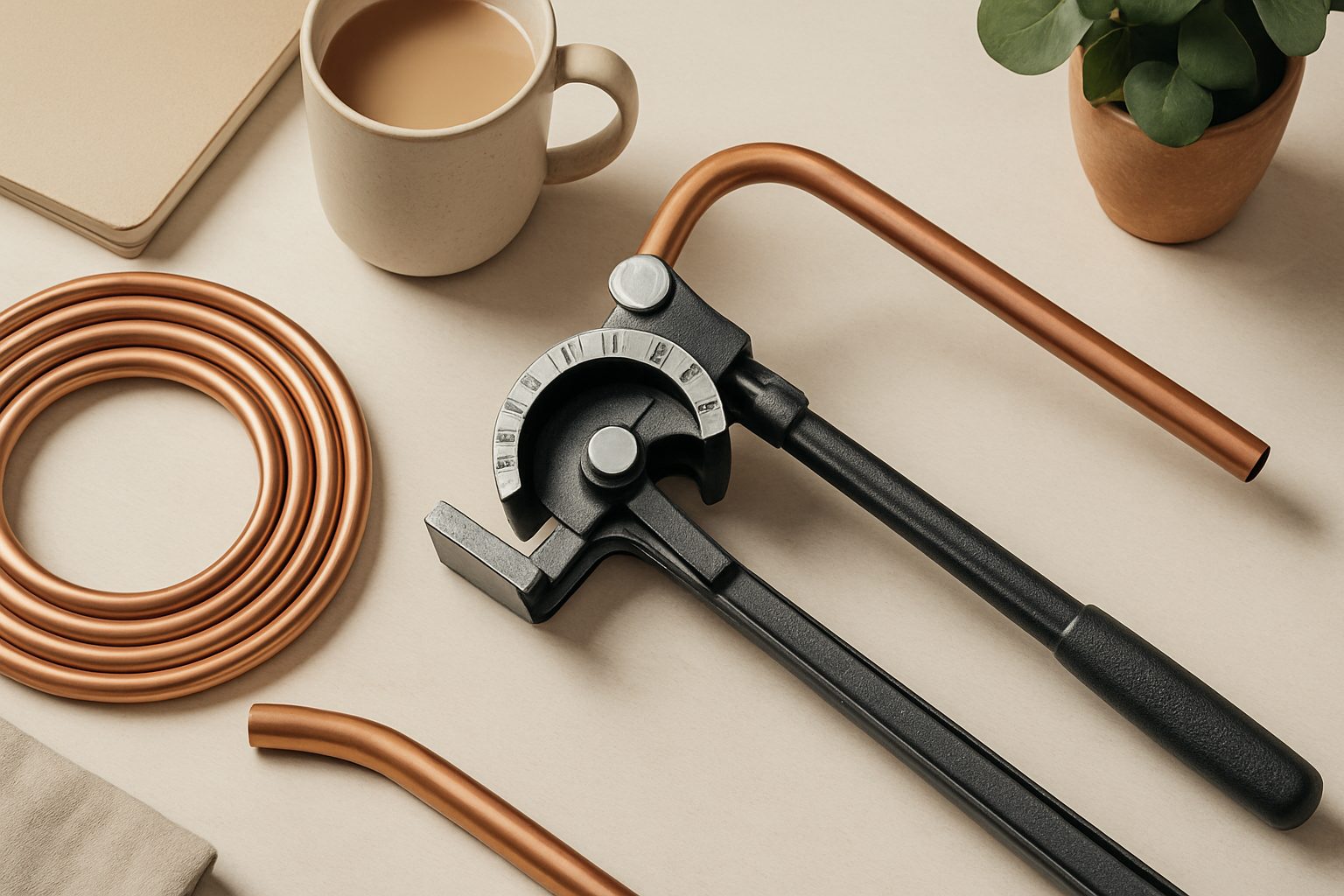
Complete Guide to Pipe Bending Machines for Home Use UK
Pipe bending is a practical skill for plumbing, heating systems, automotive projects, and fabrication work. A home pipe bender saves you time over manual methods and produces more consistent results. Whether you're installing central heating, restoring a vintage motorbike, or running a small fabrication side business, understanding which machine suits your needs matters.
Types of Pipe Benders for Home Use
Manual Tube Benders
Manual benders use mechanical leverage to bend pipes. You clamp the pipe, align the bend point, and rotate a handle or pull a lever. These machines suit occasional DIY work—renovating a single bathroom, running a few electrical conduits, minor automotive repairs. They're compact, cheap (typically £50–£200), and require no electricity or compressed air.
The trade-off is physical effort. Bending larger diameters or stiffer materials like stainless steel demands real strength. Your results depend on consistent pressure, so bends can be uneven if you rush.
Hydraulic Benders
Hydraulic machines use fluid pressure to generate force, handling heavier materials and larger diameters with less physical effort. These exist as standalone benchtop units or as press attachments. A hydraulic bender costs £300–£2,000+ depending on capacity and build quality.
Hydraulic machines produce repeatable, clean bends and work faster than manual types. They're quieter than electric alternatives and less prone to electrical faults in damp workshops. Downsides include needing occasional fluid top-ups and slower operation compared to powered machines.
Electric Benders
Electric-powered benders (sometimes called motorised or powered benders) use motors to drive the bending mechanism. They range from small benchtop units (£400–£1,500) to robust industrial machines (£2,000+).
These machines bend consistently with minimal operator fatigue. Many allow you to set bend angles electronically or mechanically for repeatable work. They're ideal if you're bending regularly—trade work, commercial plumbing, fabrication shops. Electricity requirements mean they suit permanent workshop setups.
Pipe Materials and Diameter
Copper
Copper is common in UK plumbing and heating systems. It's relatively soft, bends cleanly, and costs moderately. Most home benders handle copper tubing from 6mm to 22mm diameter. Annealed (soft) copper bends more easily than hard-drawn copper; some machines can bend both with appropriate dies.
Mild Steel
Steel pipes appear in automotive work, scaffolding, and garden structures. Steel is stiffer than copper, requiring more force or specialised dies. Manual benders generally handle steel from 6mm to 16mm diameter; hydraulic and electric machines manage larger sizes.
Stainless Steel
Stainless steel is tougher than mild steel and resists corrosion—useful for outdoor or food-related projects. It demands significant force, so only robust hydraulic or electric machines handle it reliably. Some cheaper manual benders won't manage stainless without risk of damage.
Aluminium
Aluminium is lightweight and corrosion-resistant but brittle when bent carelessly. Specialised dies prevent cracking. Fewer home machines accommodate aluminium well; manual benders sometimes do, but hydraulic and electric models are safer choices.
Plastic Tubing
Some machines have soft dies for bending plastic pipes, though many don't. Always check the manual—forcing plastic through standard dies cracks it rather than bending it smoothly.
Matching Machine Capacity to Your Work
The "capacity" of a bender describes the maximum pipe diameter and material it can handle. A manual bender rated for copper up to 22mm won't bend 28mm copper cleanly—you'll struggle or damage the machine.
If you're bending one material repeatedly (say, 15mm copper for heating), a single-capacity manual bender is cost-effective. If your projects vary—sometimes copper, sometimes steel, sometimes different diameters—look for machines with interchangeable dies or wider capacity ranges. This flexibility costs more upfront but avoids buying multiple machines.
Test the machine's force requirements before buying. Can you actually operate it comfortably? A hydraulic bender rated for large pipe requires less personal strength but costs more and takes up workshop space.
Die Sets and Bend Angles
Most machines come with dies for common angles (45°, 90°, 180°). Check what's included. Buying extra dies later is pricey—a single set can cost £50–£200.
Some machines allow free-form bending (you control the angle), whilst others only produce fixed angles. Free-form machines are more versatile for custom work; fixed machines are faster and more foolproof for repetitive tasks.
Safety Considerations
Spring-Back
Pipes tend to spring back slightly after bending—the material relaxes a fraction. Good machines account for this with slightly over-bent dies. Poor ones don't. If your bends are consistently off by 5–10°, the machine isn't accounting for spring-back properly.
Pipe Splitting and Kinking
Undersized machines or blunt dies cause the pipe to kink or split rather than bend smoothly. This ruins the pipe and can damage the machine. Never force a pipe through a machine that's struggling.
Clamping and Stability
A loose workpiece spins or slips, giving uneven bends and risking fingers or hands. Good machines have solid clamps and stable benchtop mounting. Bolting a bender to your workbench is essential for safe operation.
Eye Protection and Gloves
Pipe ends are sharp after bending. Wear gloves and eye protection, especially when deburring pipes afterwards.
Where to Start
If you're bending copper for a one-off heating project, a basic manual bender (£50–£100) does the job. For ongoing plumbing or fabrication work, a mid-range hydraulic unit (£400–£800) offers better speed and reliability. Professional or high-volume work justifies an electric machine (£1,000+).
Test machines before committing if possible. Many suppliers allow hands-on demonstrations. Start with your most common pipe diameter and material, then expand your capability as projects demand.
More options
- Clarke Pipe Benders (Clarke PB16F & Clarke Strongarm range) (Amazon UK)
- Silverline Pipe Benders & Spring Bender Sets (Amazon UK)
- Monument Pipe Bender & Lever Bender Range (Amazon UK)
- Hydraulic Pipe Bender Kits (12T / 16T multi-former sets) (Amazon UK)
- Rothenberger Rocbend & Copper Pipe Bender Sets (Amazon UK)