How to Bend Conduit for Home Electrical Installations UK
Bending conduit neatly around walls, joists and obstacles is one of those electrical installation skills that looks straightforward until you actually try it. Get it wrong and you'll damage the conduit, weaken cable protection, or end up with unsightly kinks that catch the eye every time you look at the installation. Get it right and your cables stay properly protected whilst the finished installation looks professional.
Whether you're running a new circuit around an awkward corner or routing conduit through an attic space, understanding the mechanics of conduit bending makes the whole job faster and cleaner. This guide covers the practical approach for both steel and PVC conduit, the mistakes that trip up most first-timers, and when it's worth investing in a proper pipe bender.
Types of Conduit and Your Bending Needs
In UK domestic installations, you'll typically encounter two materials. Steel conduit (often called rigid steel tube or RST) is heavier, more durable and offers excellent mechanical protection—ideal for areas prone to impact or where cables need serious shielding. PVC conduit is lighter, cheaper and easier to handle, making it popular for internal runs where cable protection is less critical.
The bending approach differs between the two because they have fundamentally different properties. Steel is stronger but less forgiving; PVC is flexible but prone to kinking if bent incorrectly. Both need care, but for different reasons.
Essential Tools and Preparation
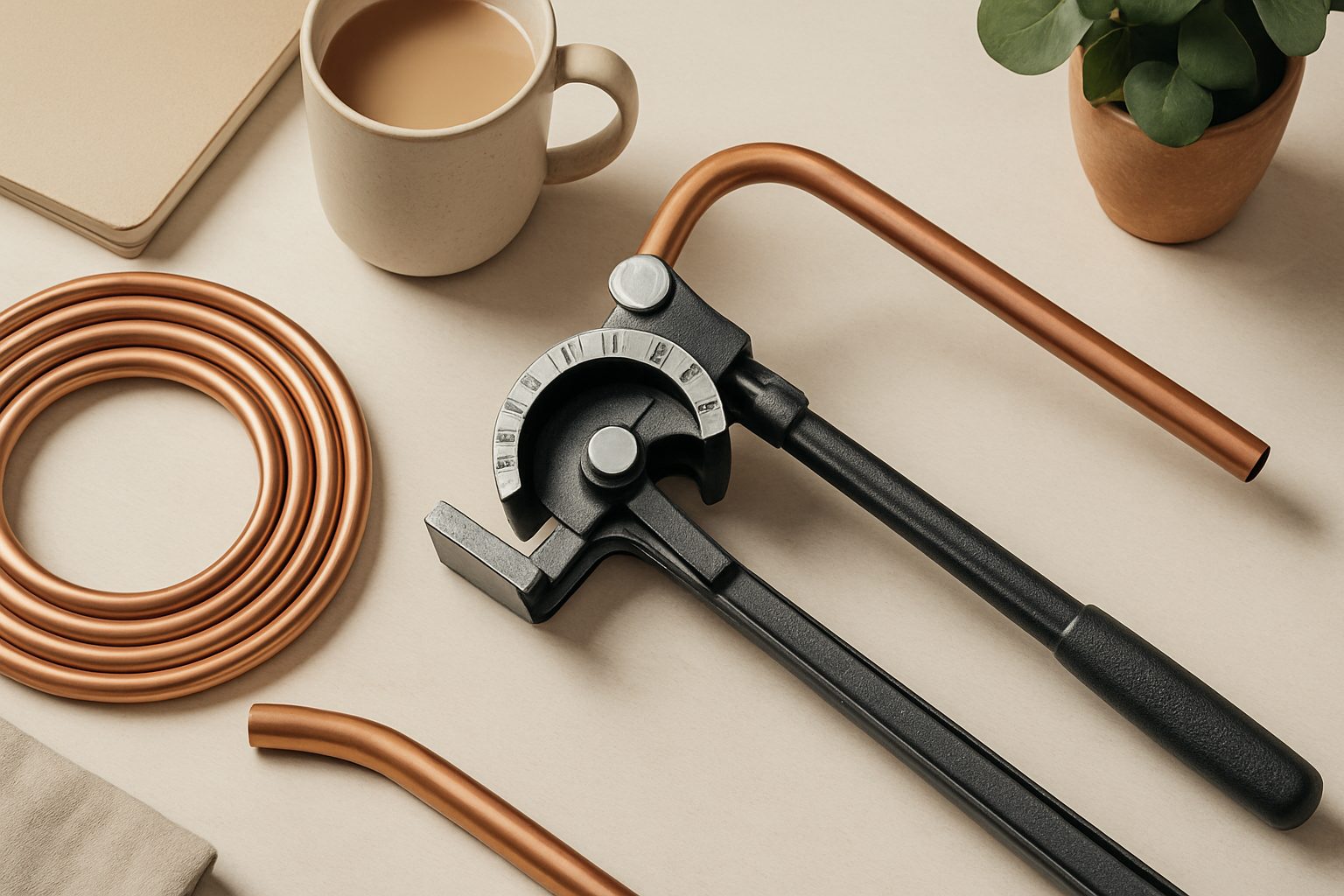
Before attempting any bend, you need the right equipment. For occasional small bends, a simple conduit bender (often called a pipe bender or bending machine) that grips the conduit and forces it into a curve is your best option. These come in manual and powered versions, with manual machines suitable for smaller-diameter runs and powered options necessary for larger steel conduit.
Measure twice before you bend. Mark the point where the bend needs to start using a tape measure and permanent marker. For a 90-degree bend, you'll need roughly 1.5 times the conduit diameter as your bend radius—tighter than this risks kinking PVC or cracking the coating on steel. Secure the conduit firmly in a bench vice or clamp before bending; unsecured material will twist unpredictably.
Bending Steel Conduit
Steel conduit is best bent using a dedicated pipe bender. Slip the conduit into the bender's channel, align your mark with the bender's indicator, and apply steady pressure. The key word here is steady. Jerky, rushed movements create uneven bends and risk the conduit slipping out of position mid-bend.
Most manual benders work by leverage—you pull the handle down or to the side, and the machine forces the conduit into a predetermined curve. A single-pull bend is usually possible for smaller steel conduit (around 16mm), but larger sizes often require multiple pulls to achieve a smooth curve without flattening the conduit's cross-section.
After bending, inspect the interior of the bend—it shouldn't be pinched or flattened. Run your finger along the outer edge; it should be smooth with no sharp edges that could catch your cables during installation. If the bend isn't quite right, you can sometimes make small adjustments by hand (wearing gloves) or rebend using the machine.
Bending PVC Conduit
PVC is more forgiving but demands a different technique. A hand-held bender works well for most domestic PVC work. Place the conduit in the bender, align your mark, and apply gradual, steady pressure. PVC bends more easily than steel, so resist the temptation to rush the process.
The critical difference with PVC is heat. Some installers heat PVC conduit gently before bending to make it more pliable and reduce the risk of kinks. If you try this, use a heat gun on a low setting—never a naked flame—and test the temperature with your gloved hand before bending. Overheating will damage the conduit and create a weak point.
For tighter bends in PVC, a spring-loaded bender is worth considering. You slide a spring over the conduit, use it to support the bend, and it prevents the material from kinking as you work. This is particularly useful if you're making a tight turn around a joist or through a confined space.
Common Mistakes to Avoid
The most frequent error is bending too tightly. Conduit needs a smooth curve with an adequate radius. Trying to create a sharp 90-degree angle in steel conduit will flatten it; in PVC it will kink. A smooth, gentle bend looks better and protects your cables far more effectively.
Rushing the bend is your second problem. Slow, steady pressure creates an even curve. Yanking the bender handle or applying sudden force introduces weak points and unpredictable results.
Finally, don't attempt bends by hand on steel conduit. It won't work, you'll damage the conduit and potentially injure yourself. Even larger PVC conduit is risky to bend without proper equipment. A bender designed for the job costs far less than replacing damaged conduit or rerunning cables.
Getting the Right Tool for the Job
If you're only bending the occasional small piece of PVC, a hand-held bender is sufficient and inexpensive. For regular steel conduit work or anything larger than 20mm, a powered bending machine becomes genuinely worthwhile. It takes the guesswork out of the process, produces consistently neat bends and saves considerable time and frustration.
The investment in proper equipment pays for itself across just a few jobs. You'll produce better-looking installations, avoid rework from bent conduit mistakes, and the whole process becomes faster and safer. When you're ready to explore the machines that'll save you time and effort, a focused review of dedicated conduit benders will show you exactly what different budgets can buy.
More options
- Clarke Pipe Benders (Clarke PB16F & Clarke Strongarm range) (Amazon UK)
- Silverline Pipe Benders & Spring Bender Sets (Amazon UK)
- Monument Pipe Bender & Lever Bender Range (Amazon UK)
- Hydraulic Pipe Bender Kits (12T / 16T multi-former sets) (Amazon UK)
- Rothenberger Rocbend & Copper Pipe Bender Sets (Amazon UK)