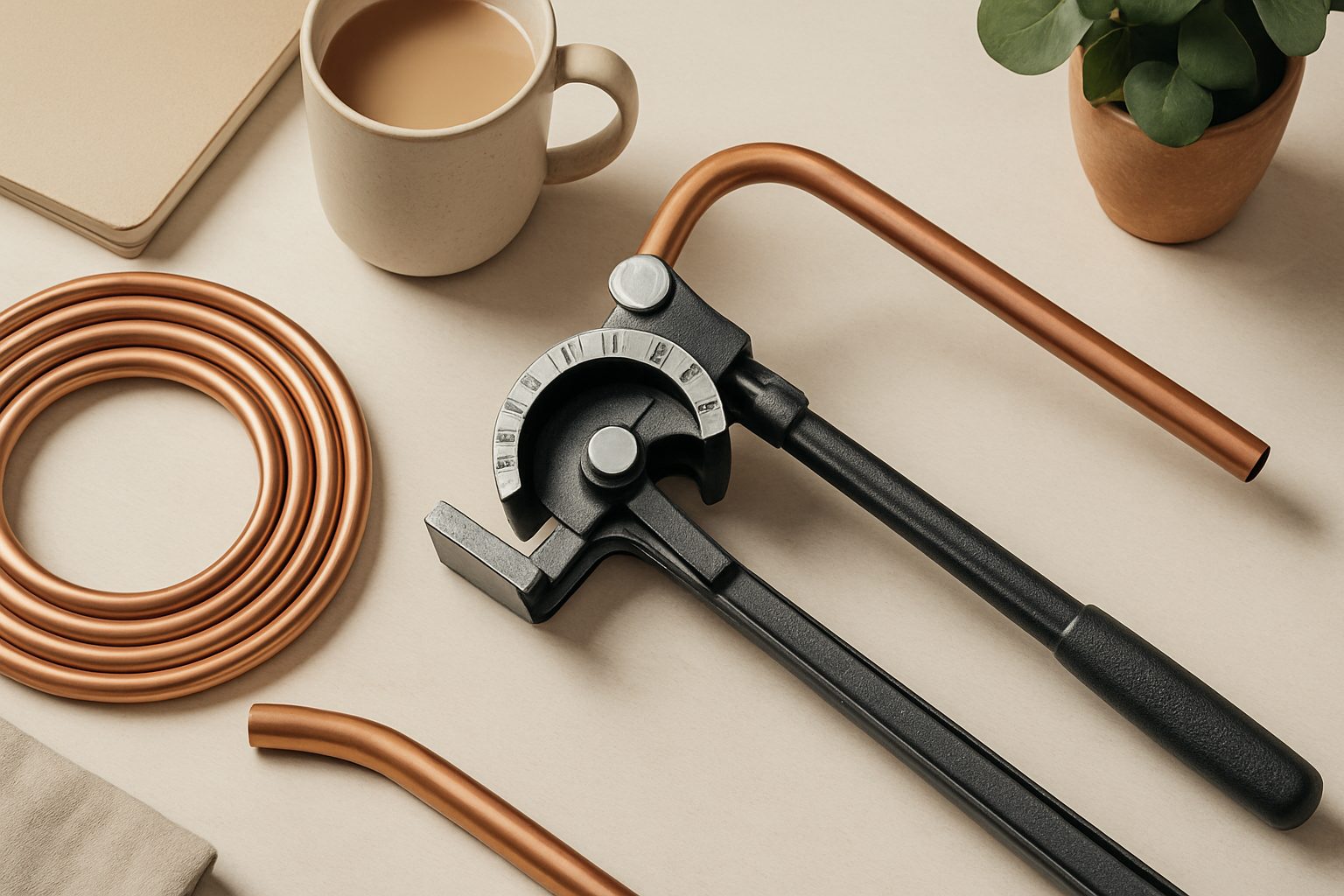
How to Choose the Right Pipe Bender for Your Project UK
Bending pipes by hand or with improvised methods usually ends in damaged material, wasted time, and frustration. The right pipe bender transforms a job from nightmare to routine, but choosing one means understanding what you're actually bending, how often you'll be doing it, and what fits your budget and workspace.
What Are You Bending?
The first question isn't which bender to buy—it's what material and diameter you're working with.
Copper is forgiving and bends cleanly with most benders. If you're installing heating systems, plumbing, or air conditioning lines, copper typically runs 10–22 mm outside diameter. A basic manual bender often suffices for occasional work.
Steel and mild steel require more force. They're stiffer and less forgiving of mistakes. Once kinked, they're usually scrap. Hydraulic or electric benders are far more reliable here, especially on anything over 15 mm diameter.
Aluminium sits somewhere in between—easier than steel, but trickier than copper because it can crack if bent too aggressively. Spring benders work, but quality matters.
Plastic pipes (PEX, PB, PVC) have different rules entirely. Most won't tolerate traditional metal-bending tools without splitting. You may need a heat bender or simply coil-store them for gentle curves.
Check your pipe's outer diameter (OD) in millimetres. This number matters far more than wall thickness when choosing a tool.
Manual vs Powered: The Work-Rate Test
Manual benders (sometimes called hand benders or lever benders) require genuine arm strength but cost £20–£150 and need no electricity. They're ideal if you bend pipes a few times a year—a boiler swap, a radiator repositioning, running a single run of 15 mm copper. They're portable, silent, and reliable. The drawback: anything over 20 mm diameter or a job requiring dozens of bends becomes exhausting.
Hydraulic benders are the workhorse choice. You pump a handle or apply steady pressure, and hydraulics do the work. They cost £150–£500+ and handle materials up to 30 mm diameter comfortably, some beyond. They're common in small heating and plumbing businesses for good reason—they're quick, produce consistent bends, and take the strain off your body. They do need occasional maintenance (keeping fluid topped up, checking for leaks).
Electric benders plug in and do the work with a motor. These cost £300–£1200+, occupy workshop space, and are genuinely powerful, handling large diameters and awkward materials. If you're bending pipes daily or working with anything over 30 mm, they're worth the investment. They're less portable but faster and require minimal user effort.
Spring benders are cheap (£5–£30) and useful for small-diameter copper (8–10 mm). You slide the spring onto the pipe, support it, and apply steady hand pressure. They work, but they're fiddly and easy to spoil bends on. Most people graduate away from them quickly.
Bend Radius: Don't Crush Your Pipes
Every pipe has a minimum bend radius—the tightest circle it can handle before kinking or cracking. This varies:
- Copper: typically 3–5 times its outer diameter
- Steel: 5–7 times its diameter
- Aluminium: 4–6 times
A 15 mm copper pipe shouldn't be bent tighter than 45–75 mm radius. Cheap manual benders sometimes force tighter radii, which looks neat but ruins the pipe's structural integrity.
Check your bender's rated minimum radius before buying. A tool that claims to bend 15 mm copper down to 2× diameter is lying or will damage material.
Budget and Frequency: The Real Decision
If you're a homeowner or occasional DIY plumber:
- Under £100: manual bender for small diameters (under 18 mm). Expect effort proportional to material stiffness.
- £100–£300: step up to a hydraulic bender if you'll do this more than once a year or regularly handle 20+ mm pipes.
If you're a tradesperson or running a small business:
- £300–£600: solid hydraulic bender with good reviews, rated for your typical working diameter. This pays for itself in time saved and fewer spoiled pipes.
- £600+: electric bender if you're bending daily or handling large diameters regularly.
Space and Portability Matter
Manual and hydraulic benders fit in a van or toolbox. Electric benders need a dedicated spot in the workshop. If you're site-based (loft conversions, plant room work), portability is crucial. If you're workshop-based, size is less relevant.
One Other Thing: Buy Guides
Before settling on a model, look for reviews and roundups specific to your application. UK plumbing forums and heating engineer communities discuss which benders actually perform, which seize up, and which are genuinely good value. Many benders from obscure suppliers are poor-quality copies that jam partway through or slip on the pipe. Stick to brands with a track record in the UK heating and plumbing sector.
The Bottom Line
Match the tool to the job: manual for occasional small-diameter copper, hydraulic for regular work across a range of diameters, electric for volume or stubborn materials. Check minimum bend radius against your pipe specs. Buy a bender rated for your material—oversized is fine, undersized is wasteful. If you're on a tight budget and only need one bend per year, rent rather than buy. If you're doing this regularly, the investment in a quality hydraulic bender saves money within months through reduced waste and faster work.
More options
- Clarke Pipe Benders (Clarke PB16F & Clarke Strongarm range) (Amazon UK)
- Silverline Pipe Benders & Spring Bender Sets (Amazon UK)
- Monument Pipe Bender & Lever Bender Range (Amazon UK)
- Hydraulic Pipe Bender Kits (12T / 16T multi-former sets) (Amazon UK)
- Rothenberger Rocbend & Copper Pipe Bender Sets (Amazon UK)