What Is a Ratchet Pipe Bender and When Do You Actually Need One UK?
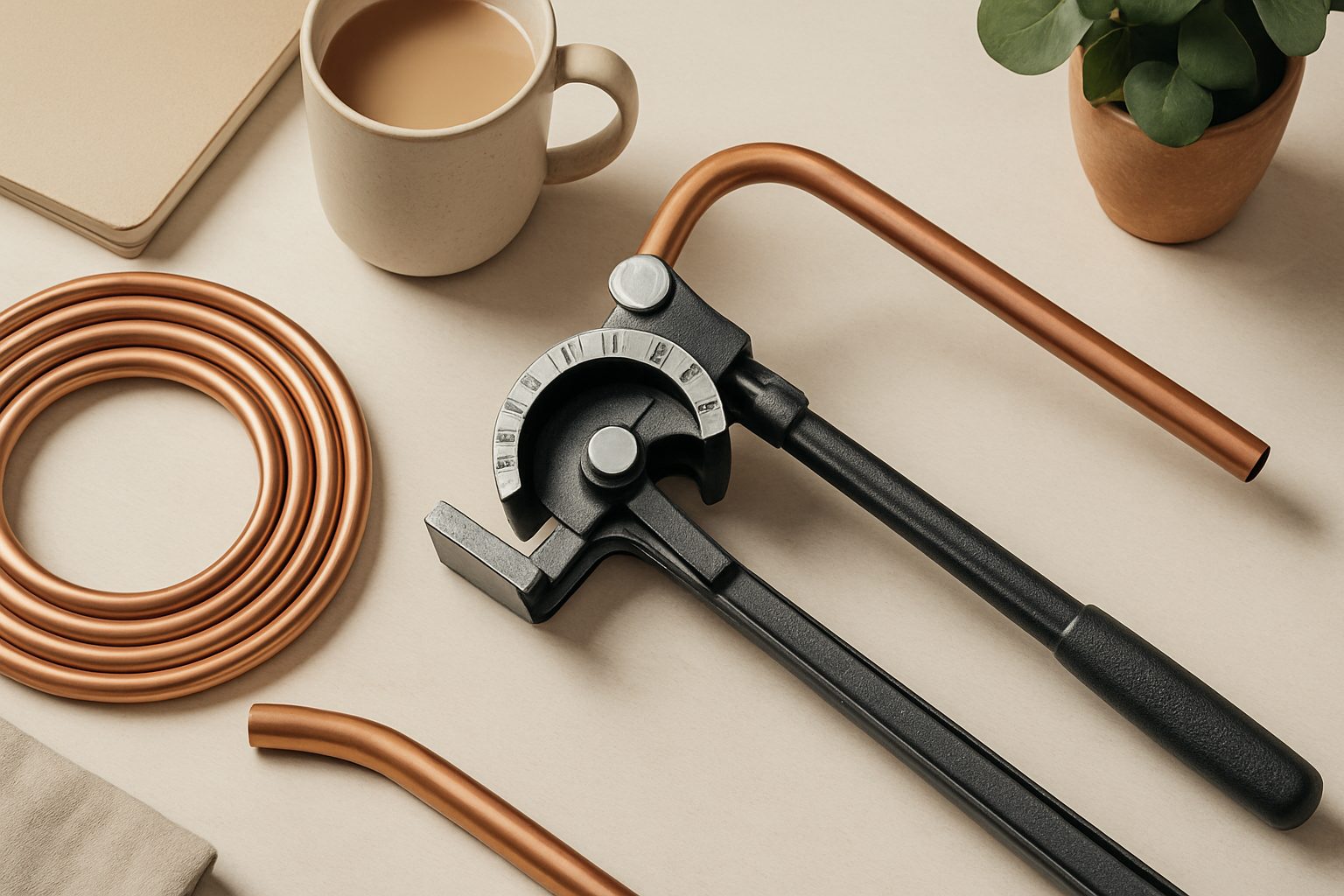
A ratchet pipe bender is a hand tool that bends copper, brass, or plastic pipe (typically 8–22 mm) using a gripping mechanism that works like a ratchet spanner. You pull the handles together repeatedly, each pull advancing the bend slightly, until the pipe reaches your desired angle. It's cheap, doesn't require electricity, and produces reasonably accurate bends without cracking the pipe—but it's also slower than other methods and limited to smaller diameters.
If you're a plumber, heating engineer, or someone fitting radiators or water supply lines, you've probably seen one. But whether you actually need one depends entirely on what you're bending, how often, and what else you have in your toolkit.
How a Ratchet Bender Actually Works
The tool has two main parts: a fixed die that holds one side of the pipe, and a moving arm (the "ratchet") that applies pressure. You slot the pipe into position, line it up with a guide that shows you the angle you're aiming for, then squeeze the handles together. Each squeeze moves the ratchet arm a small amount. You repeat this—squeeze, release, squeeze, release—until you've bent the pipe to the angle you want.
The genius of the ratchet design is that it distributes force gradually. This gentle, incremental bending prevents the pipe from kinking or flattening, which is the main risk with rougher methods. The dies come in different sizes, so the same tool can handle 8 mm, 10 mm, 15 mm, and 22 mm pipes (depending on the model).
Most UK ratchet benders include angle guides stamped or printed on the arm, so you can aim for 45°, 90°, or common setups without measuring. Some people ignore these guides and just estimate, but the guides are actually quite handy if you want repeatability.
When You'd Actually Reach for One
Ratchet benders work best for small, isolated bends—the kind you do a handful of times on a job, not dozens. Common scenarios:
- Radiator connections: Angling 15 mm copper pipe in a tight space behind a radiator or under a window sill
- Airing cupboard pipework: Bending supply lines to avoid brackets or to connect at an angle
- Underfloor heating loops: Shaping plastic Pex pipe by hand for manifold connections (though Pex tends to be more flexible and may not need bending)
- Emergency repairs: When you need a bend on site and don't have a machine bender handy
Ratchet benders shine when the bend is small-diameter, the run is short, and you don't mind the physical effort. They're also genuinely useful when space is tight—the tool itself is compact, whereas a lever bender or machine bender takes up more room.
Ratchet vs Lever Pipe Benders
This distinction matters because people often confuse the two.
A lever bender (sometimes called a hand lever bender) works differently: you place the pipe in the die, insert it into the bending arm, then pull the lever down in a single, smooth motion. The whole bend happens in one action. Lever benders are faster and less tiring for individual bends but require more force and space, and they're less forgiving if you mess up the angle.
A ratchet bender is slower per bend—you're squeezing a handle multiple times—but each squeeze is effortless, and you can stop partway and check your work. It's more controllable. Ratchet benders also tend to cost less and are lighter to carry.
For occasional work, ratchet is usually more practical. For high-volume bending (commercial plumbing shops, for example), a lever or machine bender makes sense.
Honest Pros and Cons
Pros:
- Cheap (usually £15–40 for a decent one)
- No electricity needed
- Compact and lightweight
- Gradualism reduces kinking risk
- Good control over the final angle
Cons:
- Slow: multiple squeezes per bend means repetitive motion
- Limited to small diameters (up to 22 mm; anything larger needs different equipment)
- Your hands get tired if you're bending all day
- Angle guides are helpful but not always perfectly calibrated
- You can't do really tight bends (the mechanical limit is usually around 45° in a single push)
The repetitive squeezing can also aggravate your hands if you've got arthritis or existing wrist strain, which is worth considering.
Who Should Actually Buy One
A ratchet pipe bender makes sense if:
- You're a tradesperson doing plumbing or heating work where you bend small pipe occasionally
- You want a backup tool when your main bender isn't available
- You're working in tight spaces where a lever or machine bender won't fit
- You're starting out and want something affordable to learn with
- You do DIY plumbing and hate the idea of hiring work out for a simple radiator adjustment
You probably don't need one if:
- You're bending 28 mm or larger (you'd need a different tool anyway)
- You're doing dozens of bends per day (fatigue will kill your productivity)
- You already have a machine or lever bender that works
The Bottom Line
A ratchet pipe bender is a practical, honest tool that does one job well: small, gentle, controlled bends in copper and plastic pipe. It's not fancy, it's not the fastest, but it works and it's affordable. Whether it belongs in your toolkit depends on whether you actually bend small pipe, and how often.
If you're looking at buying one, it's worth checking what's available in the UK market right now—quality varies, and some brands hold their dies more securely than others. We've reviewed the best ratchet pipe benders available to UK plumbers and DIY enthusiasts, which might help you pick one that'll actually last.
More options
- Clarke Pipe Benders (Clarke PB16F & Clarke Strongarm range) (Amazon UK)
- Silverline Pipe Benders & Spring Bender Sets (Amazon UK)
- Monument Pipe Bender & Lever Bender Range (Amazon UK)
- Hydraulic Pipe Bender Kits (12T / 16T multi-former sets) (Amazon UK)
- Rothenberger Rocbend & Copper Pipe Bender Sets (Amazon UK)